Walk Kodaira's Sacred Side: A Self-Guided Shrine and Temple Loop for the Curious Traveler
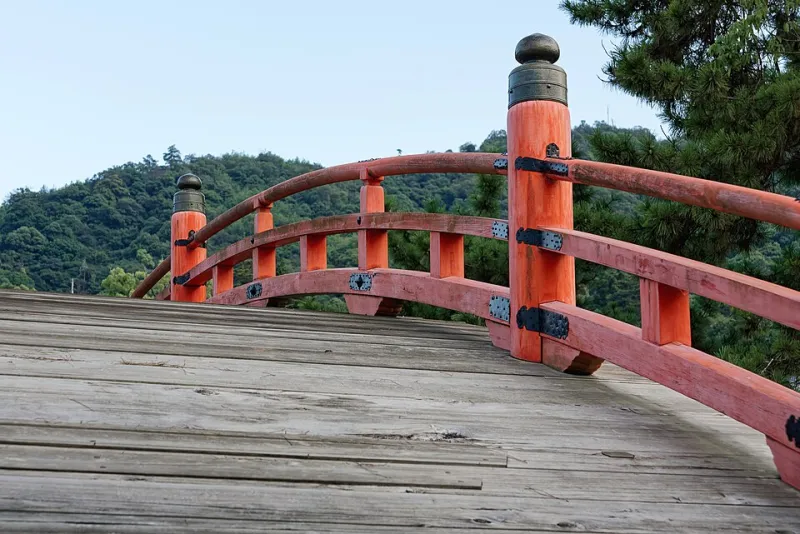
Photo: Jakub Hałun, CC BY 4.0, via Wikimedia Commons
Most Americans who visit Tokyo put Senso-ji on their itinerary, snap a few hundred photos of the Kaminarimon gate, and come away feeling like they've experienced something authentically Japanese. And sure, Senso-ji is genuinely beautiful — but it's also a place where tour group umbrellas block your sightlines and strangers accidentally elbow you into the incense smoke. There's another way.
Kodaira, the low-key residential city sitting about 30 minutes west of Shinjuku on the Seibu Shinjuku Line, doesn't advertise its spiritual geography. But tucked between its tree-lined streets and cycling paths is a loose circuit of shrines and temples that offer something the famous spots simply can't: the feeling that you actually stumbled onto something.
This walk takes most people between three and five hours, depending on how long you linger. Bring comfortable shoes, a little cash for vending machines along the way, and an open mind.
Why Kodaira's Sacred Spots Hit Different
Kodaira was developed largely during the Edo period as a planned agricultural settlement, and many of its shrines and temples were established to serve those original farming communities. That origin matters. These aren't showpiece religious sites built to impress visiting dignitaries — they're functional, lived-in spiritual spaces that local residents still use for New Year's visits, seasonal festivals, and quiet personal reflection.
That community connection is exactly what makes them so compelling for visitors seeking something beyond the tourist circuit.
Starting Point: Kumano Jinja
Begin your circuit at Kumano Jinja, a Shinto shrine tucked into a residential neighborhood not far from Kodaira Station. The approach down a short tree-lined path does real work before you even reach the torii gate — it's the kind of transition between the everyday world and sacred space that urban shrines often can't quite pull off.
Kumano Jinja is dedicated to Izanagi and Izanami, the divine couple central to Japanese creation mythology. Even if you're not fluent in Shinto cosmology, the atmosphere communicates something. The main hall is modest but well-maintained, and on weekend mornings you're likely to see elderly locals stopping in briefly before continuing their day — a reminder that this is an active place of worship, not a museum.
Take your time at the temizuya (the water basin near the entrance) and follow the purification ritual of rinsing your hands before approaching the main hall. It's a small gesture of respect that goes a long way.
The Middle Stretch: Hitotsubashi Tenmangu and the Temple Grounds
From Kumano Jinja, the walk takes you through some of Kodaira's quieter residential blocks — the kind of streets where someone's grandmother is tending a small garden and a cat is sleeping in a patch of sunlight on a concrete wall. It's genuinely pleasant.
Hitotsubashi Tenmangu is dedicated to Sugawara no Michizane, the deified scholar who has become the patron of students and academic achievement across Japan. If you visit during exam season (roughly January through March), you'll find the ema boards — the small wooden plaques where worshippers write wishes — absolutely covered in prayers for university admission. It's unexpectedly moving, even if standardized testing isn't exactly your personal spiritual concern.
Nearby, a small Buddhist temple offers a quieter counterpoint. Unlike Shinto shrines, which tend toward open, airy layouts, this temple has the compressed, interior feeling that Buddhist architecture often favors. The cemetery adjacent to the main hall is worth a respectful walk-through — Japanese cemeteries are nothing like the American version, and the dense rows of stone markers draped in moss and incense holders communicate something about continuity and memory that's hard to put into words.
Practical Tips for Respectful Visits
A few things worth knowing before you go, especially if this is your first time visiting Japanese sacred sites:
Photography is generally fine at shrines, less so at temples. As a rule of thumb, photographing the grounds and gates is usually acceptable, but pointing your camera directly at altars, memorial tablets, or people in the middle of prayer is not. When in doubt, put the phone away.
You don't need to be religious to visit. These spaces welcome curious visitors. Just move through them with the same quiet awareness you'd bring to any place that matters to the people who use it.
Cash is useful. Most shrines have small shops selling omamori (protective amulets) and ofuda (paper talismans). They're typically priced between 500 and 1,000 yen and make genuinely meaningful souvenirs — far more so than anything you'll find at an airport gift shop.
Go in the morning. Even these quieter sites get a trickle of visitors by midday. Early morning light through the trees is also, frankly, spectacular.
Ending the Loop: A Moment at the Local Inari
Many neighborhoods in Kodaira maintain small Inari shrines — dedicated to the fox deity associated with rice, fertility, and business prosperity — often no bigger than a large garden shed. These neighborhood Inari shrines aren't on any tourist map, and that's precisely the point.
Ending your walk at one of these small, tucked-away spots brings the circuit full circle in an interesting way. You started at a formal, named shrine with a mythology you could look up. You end at something hyperlocal and almost anonymous — a place that exists purely because the people living nearby wanted it to.
That's the thing about Kodaira's spiritual landscape. It's not curated for your consumption. It's just there, doing what it's always done, and you're welcome to quietly witness it.
Getting There and Getting Around
Kodaira is accessible from Shinjuku via the Seibu Shinjuku Line (roughly 28-35 minutes, depending on the train type). Most of the sites on this circuit are walkable from Kodaira Station or Higashi-Kodaira Station, though a few require a short bicycle ride — rental bikes are available near the station. Google Maps works reliably for navigation, and most shrine names can be searched in English.
There's no single perfect day to do this walk, but weekday mornings are the quietest. If you're visiting in spring, the cherry blossoms along the connecting paths between sites turn the whole thing into something close to magical.