The Invisible Kitchen: How Kodaira Quietly Feeds Half of Tokyo
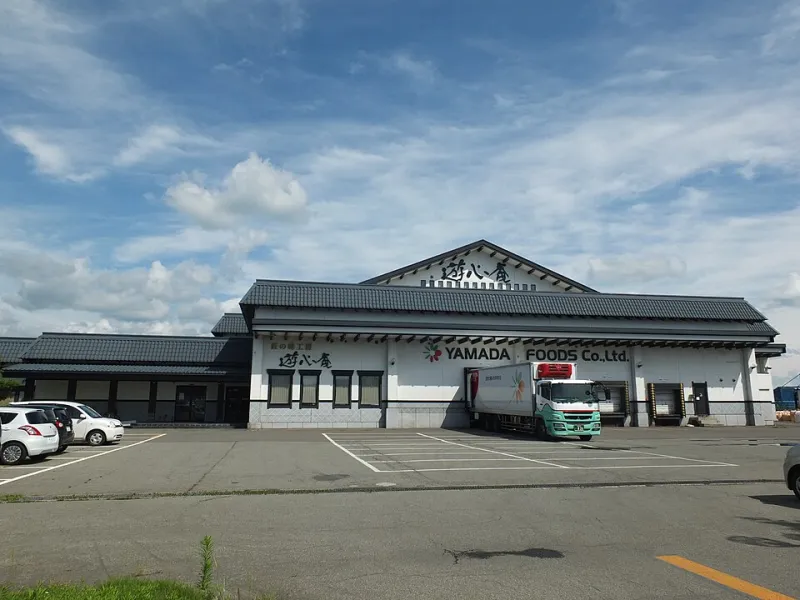
Photo: MWE, CC BY-SA 4.0, via Wikimedia Commons
Most people pass through Kodaira without giving it a second thought. They're on the Seibu line heading somewhere else, watching the suburban landscape scroll by — quiet streets, family restaurants, the occasional convenience store. Nothing that screams food destination.
That's kind of the point.
Beneath the unremarkable surface of this mid-sized Tokyo suburb runs a surprisingly serious food production infrastructure. Kodaira and the broader Nishi-Tama corridor are home to a collection of manufacturers, wholesalers, and specialty producers who collectively supply a significant chunk of what Tokyo eats every day. The tofu in your ramen, the pickled vegetables in your bento, the soy-based seasonings in dishes you've eaten at restaurants across the city — there's a decent chance some of it passed through Kodaira first.
For food travelers who've already done the market tours in Tsukiji and eaten their way through Shinjuku's restaurant alleys, this is the next level. And almost nobody is talking about it.
What Does a Food Town Actually Look Like?
Kodaira doesn't look like a food town, which is part of what makes it interesting. There's no central market district, no neon-lit food hall. The producers here operate out of low-profile industrial buildings tucked between residential neighborhoods — the kind of places you'd drive past a hundred times without registering.
This is what food scientists and industry insiders sometimes call a secondary food economy: the unglamorous, essential layer of production that sits between the farm and the restaurant. It's not farm-to-table. It's farm-to-processor-to-distributor-to-table, and that middle step is where a huge amount of craft and knowledge quietly lives.
In Kodaira's case, that middle step includes tofu and soy product manufacturers, traditional pickle producers (tsukemono), specialty seasoning blenders, and small-batch condiment makers whose products end up in some of Tokyo's most respected kitchens — often without the restaurant ever advertising where the ingredients came from.
The Tofu Factor
If you want to understand Kodaira's food identity, start with tofu. The city and surrounding areas have a long history of soy processing, driven partly by water quality — the groundwater in this part of western Tokyo has historically been clean and mineral-balanced in ways that matter enormously for tofu texture and flavor.
Several small tofu producers still operate in Kodaira, making product daily in small batches. Some sell directly from their facilities, and buying fresh tofu this way is a genuinely different experience from anything you'd find at a grocery store. The texture is silkier, the flavor more pronounced, and the whole thing has a warmth to it — literally, sometimes — that pre-packaged product just can't replicate.
For American visitors who think of tofu primarily as a flavorless protein substitute, eating it fresh from a small local producer is legitimately revelatory. This is the version of the ingredient that Japanese home cooks have been building dishes around for generations.
Tsukemono: The Pickled Underbelly of Japanese Cuisine
Pickled vegetables — tsukemono — are everywhere in Japanese food, but they're easy to take for granted. A small pile of pickles comes with your teishoku lunch set, your ramen, your rice at the end of a kaiseki meal. They're the supporting cast, rarely the star.
But tsukemono production is genuinely complex. Different vegetables require different salt concentrations, fermentation times, and flavor additions — sake lees, miso, rice bran. Getting it right takes real skill, and several Kodaira-area producers have been doing it for decades, supplying both retail chains and restaurant groups across greater Tokyo.
A few of these producers are open to direct purchases, and some have informal arrangements where you can see the process if you show up at the right time and ask politely. It's not a formal factory tour situation — this is Japan, not a food tourism operation — but the producers are often genuinely happy to talk about their work with people who are clearly interested.
Convenience Store Supply Chains: The Unexpected Rabbit Hole
Here's something that surprises a lot of American visitors: Japanese convenience store food is actually good. Not "good for gas station food" good — genuinely good. The onigiri, the sandwiches, the prepared meals. There's real culinary craft behind them.
What most people don't know is that the supply chains feeding those convenience stores are hyper-regionalized. A 7-Eleven in western Tokyo may source its egg salad sandwiches from a manufacturer 20 minutes away. The logistics are tightly managed, the quality specifications are strict, and the producers who meet those specs tend to be serious operations.
Kodaira has several food manufacturers in this category — companies that aren't household names anywhere but whose products are consumed by millions of people every week. Visiting the city and knowing this context changes how you look at even a mundane convenience store stop. That onigiri you're eating at the Lawson near Kodaira Station might have been made a few kilometers away, earlier that morning.
How to Actually Experience This as a Visitor
Let's be honest: this isn't a plug-and-play tourist experience. Kodaira's food production scene doesn't have a visitor center or a hop-on tour bus. Engaging with it requires a little more initiative.
Direct purchase from small producers: A number of tofu makers, pickle producers, and small condiment manufacturers sell directly from their facilities or have small attached shops. Google Maps in Japanese (switching your search language helps) will surface options that English-language searches miss. Look for tōfu-ya (豆腐屋) and tsukemono-ya (漬物屋) in the Kodaira area.
Neighborhood supermarkets over chain stores: Kodaira's locally-owned supermarkets often stock products from nearby manufacturers that you won't find at national chains. Spending 20 minutes in one of these stores reading labels — or asking staff, who are generally patient with curious foreigners — is a low-effort way to map the local food ecosystem.
Talk to restaurant owners: Kodaira's independent restaurant scene is small enough that many owners source ingredients locally and are happy to tell you about it. The izakayas and teishoku spots around the train stations are good starting points. Ask where something came from and you'll often get a surprisingly detailed answer.
Time your visit around weekday mornings: Producers and small shops tend to be most accessible — and freshest — on weekday mornings. Weekend visits are fine, but you'll get more interaction and a better sense of the working rhythm of these places on a Tuesday or Wednesday.
Why This Matters
Food travel has gotten pretty sophisticated in the US over the past decade. People fly to Nashville for hot chicken, drive three hours into the California Central Valley to visit specific farms, plan entire trips around a single restaurant reservation. The appetite for authentic, behind-the-scenes food experiences is real.
Kodaira offers something in that same spirit — just without the Instagram hype or the waitlist. It's a place where food is made seriously, sold quietly, and consumed daily by millions of people who never think about where it came from.
Showing up and paying attention is its own kind of reward.