After Midnight in Kodaira: The Commuters Keeping Tokyo's Night Economy Alive
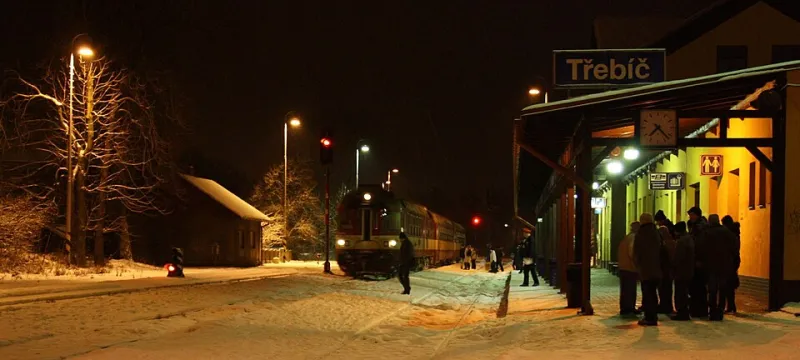
Photo: Frettie, CC BY-SA 3.0, via Wikimedia Commons
The 12:47 a.m. Chuo Line train pulls into Kodaira Station with a soft mechanical sigh. The platform, mostly empty at this hour, receives a small but steady trickle of passengers — men and women in work uniforms, hospitality staff still faintly smelling of kitchen grease, security guards with lanyards swinging from their belts. Nobody is talking much. They've been on their feet for eight, nine, sometimes twelve hours. Home is ten minutes away, and that's all that matters right now.
This is a scene that plays out every single night in Kodaira, and it's one that most visitors — or even most Tokyoites — never think about. The city's famous nightlife, its 24-hour izakayas, its gleaming hotel lobbies, its hospital emergency wings — none of it functions without people who live somewhere else, commute in at unconventional hours, and reverse the flow when everyone else is heading out.
Kodaira's night-shift workers are that somewhere else.
The Reverse Rush Hour Nobody Talks About
Most Americans are familiar with the image of Tokyo's morning rush: the white-gloved station attendants pushing passengers into packed train cars, the sea of dark suits surging through Shinjuku. What gets far less attention is the inverse — the workers heading into the city as the evening ramp-up begins, and then crawling back out again well after midnight.
For residents who work evening shifts in Tokyo's service industry, the commute is structured around a completely different rhythm. A bartender in Roppongi might leave Kodaira around 5 p.m., work until 2 a.m., and then face the grim calculus of whether the last train is still running or whether they're sleeping on a coworker's couch. Hotel staff on overnight rotations sometimes don't see their homes for 30-hour stretches.
Japan's train system, legendary for its punctuality, has a less-discussed Achilles heel: it largely shuts down between roughly midnight and 5 a.m. For night-shift workers, this isn't an inconvenience — it's a logistical puzzle they solve every single workday.
"You learn the last train times the way other people learn their kids' school schedules," says one Kodaira resident who works evening shifts at a hotel near Tokyo Station. "Miss it once, and you're paying for a taxi or a manga café. Miss it twice, and you start planning your life around it."
What Fills the Gap: Kodaira's 24-Hour Ecosystem
For workers who do make it back to Kodaira late, the city has quietly built an infrastructure to receive them. It's not glamorous. It's not Instagrammable. But it works.
The local FamilyMart and Lawson locations near the station stay lit through the night, and their late-night customer base skews heavily toward people in work clothes. A bowl of convenience store ramen at 1 a.m. isn't anyone's idea of fine dining, but when you've just finished a shift and the kitchen is dark at home, it's genuinely sustaining. Convenience store culture in Japan is something American visitors often underestimate — these aren't gas station snack aisles. The food quality is real, and for night-shift workers, these stores function as a kind of democratic canteen.
A handful of ramen shops and diners near Kodaira's main commercial corridors keep later hours than you'd expect for a residential suburb. These spots operate with the quiet understanding that their core customers aren't date-night diners — they're people decompressing after a long shift, eating alone, scrolling their phones, and slowly re-entering civilian life. The atmosphere is low-key and deliberately unhurried.
What Japan's Work Culture Looks Like from the Outside In
For American expats living in Kodaira, the night-shift commuter reality is often one of the first genuinely surprising things about daily life here. Back home, late-night workers tend to live close to where they work — or at least that's the assumption. The idea of commuting 45 minutes each way for a midnight shift feels extreme through an American lens.
But in Japan's greater Tokyo area, where housing costs in the city center are prohibitive and suburban train access is excellent, this arrangement is simply practical. Kodaira offers families more space, lower rent, and a calmer environment — and the trade-off is the commute, even when that commute happens at antisocial hours.
There's also something worth noting about the social contract embedded in this arrangement. Night-shift workers here rarely complain publicly about their schedules — at least not in ways that foreigners immediately recognize. The cultural pressure to be a reliable, uncomplaining member of a team runs deep. What you notice instead are the small adaptations: the carefully packed bento box, the strategic nap on the train, the practiced efficiency of getting from the station to the front door in the minimum possible time.
The Hidden Economy and Who It Serves
Zoom out a little, and Kodaira's night-shift population starts to look like a microcosm of something much bigger. Tokyo's service economy — its restaurants, hotels, hospitals, entertainment districts — depends on a distributed labor force that fans out across the surrounding suburbs every morning and returns each night. Kodaira is one node in that network.
For visitors curious about the real texture of Japanese urban life, paying attention to this dynamic is illuminating. The next time you're out late in Shinjuku or Shibuya, the person refilling your water glass or handing you change at the register may well be heading back to Kodaira when their shift ends. The unglamorous logistics of that return trip — the train timing, the late-night convenience store stop, the quiet walk through a sleeping suburb — are as much a part of Tokyo's story as the neon.
If You're Curious: How to See This for Yourself
If you're staying in or visiting Kodaira and want a glimpse of this side of things, it's not hard to find. Take a late train back from central Tokyo on a weeknight — the Chuo or Seibu Shinjuku lines both serve Kodaira — and just watch who's on the platform. Stop into a convenience store near the station after midnight. Order a bowl of something warm at one of the later-hours spots near the main shopping street.
You won't be intruding on anything. You'll just be seeing the city on a different clock — the one that most tourists never bother to set.