How Kodaira Does Festivals: Big Culture, Zero Meltdown
Let's be honest about something. If you've ever fought your way through a major Tokyo festival — elbowing past tour groups, waiting 45 minutes for a single skewer of yakitori, losing your travel companion somewhere near the taiko drums — you already know that "cultural immersion" and "overwhelming sensory chaos" can be the exact same experience.
Kodaira doesn't do that to you.
About 30 minutes west of Shinjuku on the Seibu Shinjuku Line, this mid-sized city of roughly 190,000 people has a festival calendar that quietly runs all year. These aren't watered-down imitations of the big Tokyo events. They're something better — community gatherings where the people around you are actual neighbors, where the vendors know their regulars by name, and where you can actually hear the music.
Why Size Changes Everything
There's a concept in Japanese community life called machi no にぎわい — loosely, the lively energy of a town. Kodaira's events are built around that idea. They're designed for the people who live here, not for Instagram.
Take the Kodaira Ondo, the city's summer dance festival held each August. It's a bon odori — a traditional circular dance celebration tied to the Obon season, when Japanese families honor their ancestors. In Tokyo proper, bon odori events at major shrines can draw tens of thousands of people. Kodaira's version? Intimate enough that first-timers can actually watch a few rounds of dancing, pick up the basic steps, and join in without feeling like they're crashing something.
"People here don't stare at you if you try and mess up the steps," said one American expat who's attended three years running. "In fact, someone will probably just quietly get next to you and show you what to do. It's weirdly wholesome."
The yukata rentals available near the event area don't hurt either, if you want to go full immersion.
Spring Isn't Just Cherry Blossoms
Most visitors to the greater Tokyo area fixate on cherry blossom season, and fair enough — it's spectacular. But Kodaira's spring events extend well past the sakura window.
The city hosts a series of local market events and neighborhood festivals through April and May that center around Kodaira's agricultural identity. Yes, this suburb still has active farms. The spring market events near Ogawa-machi and along the Tamagawa Josui waterway channel feature locally grown produce, handmade crafts, and the kind of food stalls that reflect what people actually eat around here — not just what tourists expect Japanese food to look like.
These aren't ticketed events with wristbands and crowd management staff. You walk up, you browse, you eat something good, you talk to people if you feel like it. The vibe is closer to a really excellent American farmers market than a theme park festival, which makes them surprisingly easy to navigate even if your Japanese is limited to sumimasen and pointing.
The Autumn Circuit Nobody Talks About
Fall might be Kodaira's strongest season for community events, and it's almost completely off the radar for visitors.
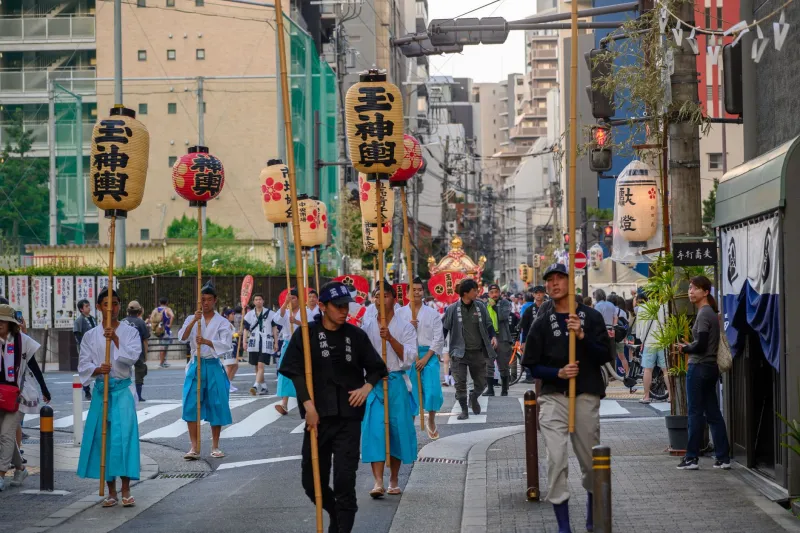
Several of the city's neighborhood associations — chōnaikai — host their own autumn festivals in September and October, often centered around local shrines. These hyperlocal events are the real deal. Mikoshi (portable shrines) get carried through the streets by teams of residents. Food stalls materialize. Kids in happi coats run around looking extremely pleased with themselves.
The Kodaira Festival (Kodaira Matsuri), typically held in October, is the city's largest annual celebration and brings together food vendors, live performances, and community organizations in a format that feels genuinely festive without tipping into overwhelming. Local businesses sponsor booths. School groups perform. There's usually a section where you can try traditional games that most adult tourists haven't thought about since childhood — ring toss, goldfish scooping, that kind of thing.
"It's the one time of year where you see basically everyone," one long-term resident told us. "Families, older folks, young people — it's a real cross-section of the city."
Practical Tips for Actually Enjoying Yourself
A few things worth knowing before you go:
Get there at an odd time. Even Kodaira's more popular events have peak hours — usually early evening on the first day. Arriving mid-afternoon or on the second day of a multi-day event means thinner crowds and vendors who have time to actually talk to you.
Bring cash. This applies to basically all of Japan, but festival vendors especially. Small bills are your friend. A mix of 1,000-yen notes and coins covers most food stalls without anyone needing to make change for a 10,000.
Download Google Translate with Japanese offline. Festival signage is rarely bilingual. The camera translation feature works well enough to tell you what's in the food you're about to eat, which matters if you have dietary restrictions.
Look up the event on the city's official site before you go. Kodaira City's website (in Japanese, but navigable with a browser translation tool) lists upcoming events with dates and locations. Dates shift slightly year to year, so double-checking is worth the two minutes.
Don't stress about participating perfectly. Nobody expects you to know the dance steps or understand the announcements over the PA system. Genuine curiosity and a little friendliness go a long way. Smile, try the food, applaud when other people applaud.
What You Actually Get Out of This
Here's the honest pitch for spending time at Kodaira's local festivals instead of — or alongside — the big Tokyo events.
You get to see how a Japanese city actually celebrates. Not the curated, tourist-facing version. The version where a guy in his 60s is doing the bon odori dance with zero self-consciousness, where kids are being kids, where the food is good because the vendors are feeding their neighbors and their reputation depends on it.
American travelers often come to Japan looking for something authentic, which is a word that gets thrown around so much it's almost lost meaning. But Kodaira's festivals are authentic in the most literal sense — they're made by and for the community that lives here, and you're welcome to be part of that for a day.
That's harder to find than you'd think, even in Japan. In Kodaira, it's just the regular schedule.