The Train That Built a Town: Seibu Shinjuku Line and the Making of Modern Kodaira
Ask most Americans how cities grow and they'll describe something familiar: highways, suburbs, strip malls, cars. The American urban sprawl model is basically hardwired into our cultural imagination. So when you land in Tokyo and start exploring places like Kodaira — a city of roughly 200,000 people sitting about 20 miles west of Shinjuku — it can take a while to understand what you're actually looking at.
Kodaira didn't grow outward from a highway interchange. It grew outward from a train station. Several of them, actually. And that single difference explains almost everything about why this place feels the way it does.
Fields First, Then Tracks
For most of its pre-modern history, Kodaira was agricultural land. The Musashino Plateau — the wide, flat upland that stretches west of Tokyo — was known for mulberry cultivation and silk production, not urban density. Small farming villages dotted the area, connected by unpaved roads and the slow rhythms of agricultural life. There was no particular reason for anyone in Tokyo to think much about Kodaira at all.
That started changing in the early 20th century, when private railway companies began laying lines westward out of the capital. In Japan, unlike the United States, railways were often developed by private enterprises that had a direct financial interest in making the land along their routes desirable. Build the track, then sell the real estate nearby. It sounds almost circular, but it worked — spectacularly.
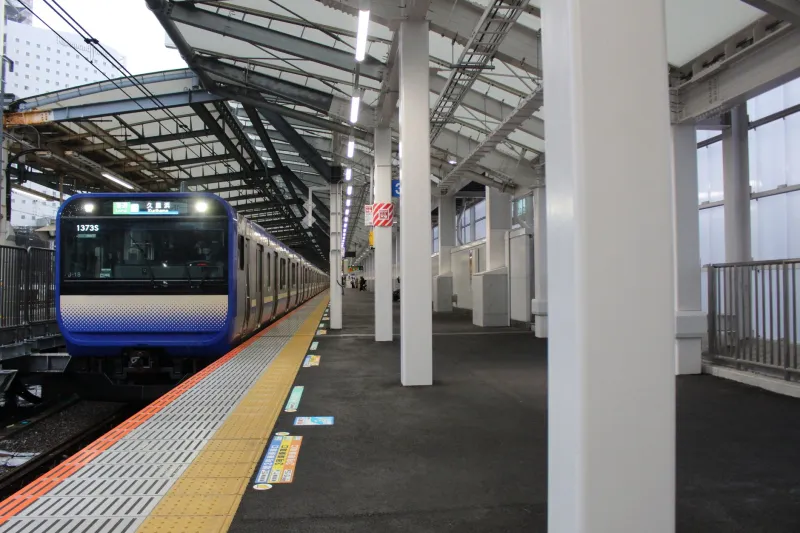
The Seibu Shinjuku Line, which today connects Kodaira to central Tokyo in under 40 minutes, was part of this broader pattern. As the line extended westward through what would become Kodaira, it didn't just connect existing communities — it created the conditions for new ones. Stations appeared, neighborhoods clustered around them, and slowly the agricultural character of the area began to give way to something denser and more complex.
The Postwar Acceleration
The real transformation came after World War II. Tokyo's reconstruction and subsequent economic boom created enormous demand for housing, and the western suburbs absorbed a significant chunk of that pressure. Kodaira, with its train access and relatively affordable land, became a destination for young families and workers who couldn't afford (or didn't want) to live in the city center.
This wasn't unique to Kodaira — it was happening all along the Seibu line and across Tokyo's expanding commuter belt. But Kodaira developed a particular character during this period: dense enough to have genuine urban amenities, spacious enough to retain green pockets and residential quiet. The city that emerged wasn't a bedroom community in the dismissive American sense of the term. It was a functioning place with its own schools, shops, temples, and community identity.
What the train made possible, in other words, wasn't just commuting. It was a whole way of organizing daily life at a scale that the car-dependent American suburb never quite achieved.
Why This Matters for Understanding Tokyo
Here's something that surprises a lot of first-time visitors to Japan: Tokyo isn't really one city. It's a collection of overlapping urban systems — wards, cities, towns — that happen to share infrastructure and governance. Places like Kodaira are formally separate municipalities, not just neighborhoods of Tokyo, even though they function as integral parts of the metropolitan whole.
The train network is what makes that integration work. Without the Seibu Shinjuku Line, Kodaira would be a mid-sized provincial city with its own economy and self-contained identity. With it, Kodaira residents can be in Shinjuku in 35 minutes and back home for dinner. That accessibility has shaped everything from property values to restaurant culture to the demographic mix of who actually lives here.
For Americans trying to understand what they're looking at, the closest analogy might be something like the old streetcar suburbs of the early 20th century — places like Pasadena outside Los Angeles or Evanston outside Chicago — where rail access shaped neighborhood character before the car took over. Except in Kodaira's case, the car never really took over. The train stayed central, and the urban form that developed around it never had to be retrofitted.
What You Still See Today
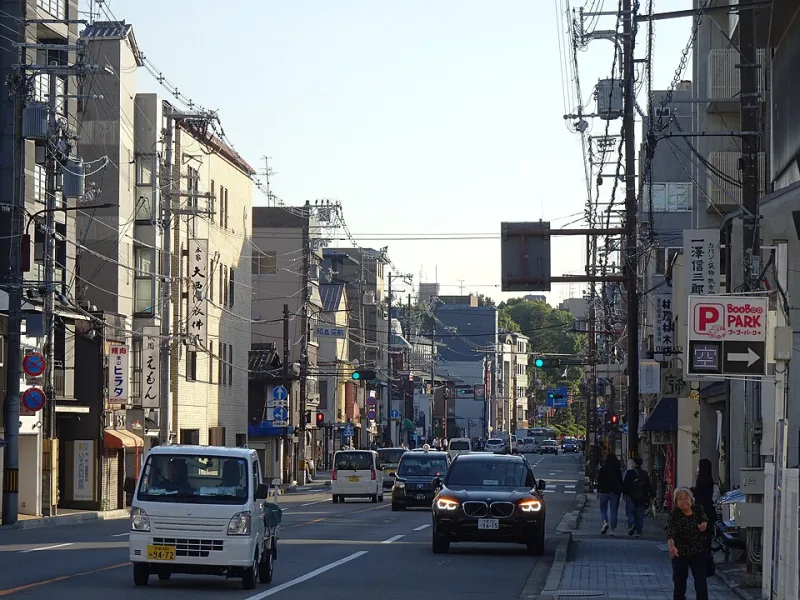
Walk around Kodaira's main station areas — Kodaira Station on the Seibu Shinjuku Line, or Higashi-Kodaira a bit further east — and you can still read the urban logic in the landscape. Density clusters near the stations and thins out as you move away. The streets closest to the platforms are commercial; a few blocks further, they're residential. Parks and green spaces fill in the gaps that weren't worth developing intensively.
This is what urban planners sometimes call transit-oriented development, though in Japan it happened organically over decades rather than through conscious policy design. The stations were the anchors, and everything else arranged itself accordingly.
For expats arriving in Kodaira, that logic is immediately practical. You want to live walking distance from a station. You want to understand which line goes where and how long transfers take. The train schedule isn't just transportation information — it's the rhythm of daily life. Rush hour on the Seibu Shinjuku Line into Shinjuku is genuinely packed, in the way that only Tokyo commuter trains can be. But the frequency is high, the network is reliable, and once you've internalized it, getting around feels almost effortless.
The Infrastructure You Don't Notice Until You Do
There's a tendency, when visiting or moving to a place like Kodaira, to focus on the visible stuff: the food, the festivals, the temples, the community. All of that is worth your attention. But the invisible infrastructure underneath it — the train line that's been running westward out of Shinjuku for over a century — is what made all of it possible.
Japan's urban design is sometimes held up as a model for how cities should work: walkable, transit-connected, human-scaled without being low-density. Kodaira is a pretty good example of what that looks like in practice, not in some idealized future-city sense, but in the messy, layered, historically accumulated way that real places actually develop.
The Seibu Shinjuku Line didn't just connect Kodaira to Tokyo. It made Kodaira what it is. And understanding that — really sitting with the idea that a single piece of infrastructure could shape a community's character across generations — is one of the more quietly profound things about living here.
Next time you're on that train, watching the city thin out into residential streets and then gather again around the next station, you're not just commuting. You're reading a century of urban history in real time.